
Single-Ply Roofing Protection

How to best protect your single-ply roofing:

Your roofing system is composed of high-quality materials and comes with a comprehensive warranty. Both aid in the protection of your building's investment, but they also rely on your dedication to proper upkeep. Knowing when and why to evaluate your roof for maximum performance is crucial to ensuring a long-lasting roof.

 Do…

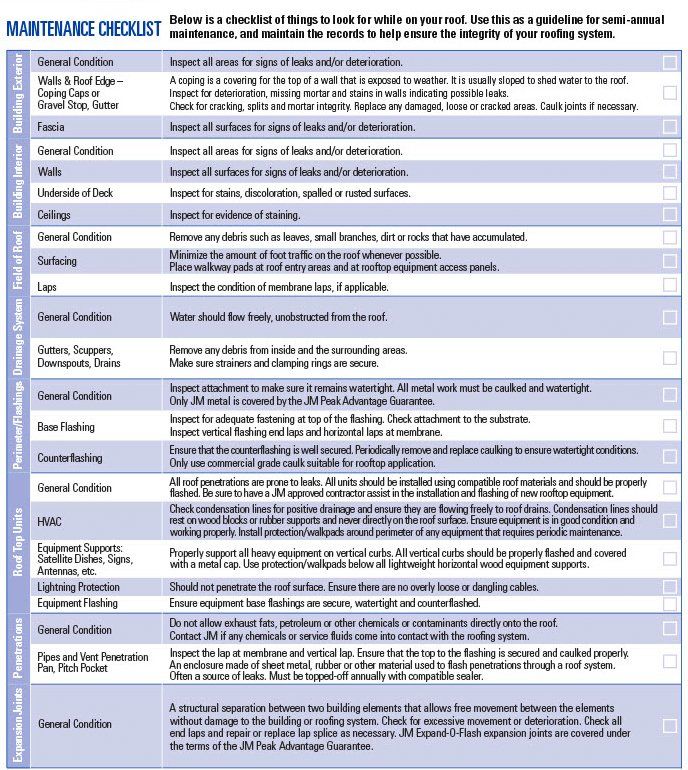
•  Perform inspections at least twice a year or as required by the guarantee. It’s best to inspect your roof at the end of winter and the end of summer, when it has gone through the most thermal stress.

•  Conduct inspections immediately after unusual occurrences such as heavy rains, high winds, hail, nearby fires, explosions, etc.

•  Watch your roof for trouble spots, and clear away any debris or contaminants on a regular basis. This includes unclogging drains in the spring and fall.

•  Establish a rooftop control policy, and keep any access doors or hatches locked.

•  Keep a file of all records, inspection reports and activity related to your roof.

•  Advise equipment service personnel to be careful handling tools and heavy equipment on your roof. 


Don’t…

•  Allow unqualified personnel to access or maintain your roof.

•  Permit equipment service personnel to make penetrations into your roof. These should be handled by an approved roofing contractor.

•  Power wash your roof, as it may cause unintended damage.

•  Move heavy equipment across your roof.

• Puncture the membrane.
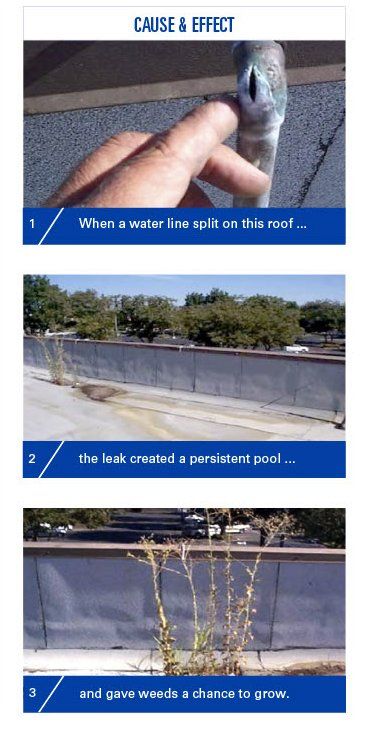
graph of water damage
maintain checklist
supplier information for Rodd's Roofing

Rodd's Roofing would like to thank their supplier Johns Manville for the content provided in this blog. You can explore more at https://www.jm.com/
Raindrops splash onto a dark, wet surface, creating ripples and bubbles in a heavy downpour.
April 16, 2026
Prepare your commercial roof for spring storms by addressing winter damage, drainage issues, and wind risks before costly repairs arise.
Raindrops splash into deep, shimmering puddles on a wet pavement with a blurred red building in the background.
April 9, 2026
Spring rain often exposes roof damage caused by winter—learn the warning signs and why a post-winter inspection can prevent costly repairs.
Melting snow and an icicle hang from a red metal roof under a bright blue sky.
March 26, 2026
As snow melts and temperatures fluctuate, hidden winter roof damage can surface—learn what to look for and why a professional spring inspection is essential.
A low-angle view of shiny metal roofing panels with vertical seams against a bright blue sky with a few clouds.
March 19, 2026
Explore how asphalt, metal, slate, copper, single-ply membranes, and silicone coatings perform in Vermont’s demanding climate.
Icicles hanging from the dark brown edge of an umbrella against a clear blue sky.
March 12, 2026
March is the ideal time to inspect your roof after winter stress—learn what to look for and why scheduling a professional spring evaluation can prevent costly leaks.
March 5, 2026
Ensure your commercial roof drains, scuppers, and gutters are ready for spring storms—prevent ponding water and costly interior damage with proactive maintenance.
Flat, black roof with ice and snow. Brown brick trim, bare trees and a snowy background.
February 26, 2026
February’s freeze-thaw cycles put flat roofs at risk—learn how low-slope pooling, frozen scuppers, and blocked internal drains create hidden hazards and why pre-thaw maintenance is critical.
Worker in safety vest and hard hat chipping ice with a shovel on a commerical roof.
February 19, 2026
Learn how unchecked ice buildup can crack flashings, block drains, and force water under roof seams—causing damage that worsens with every winter freeze-thaw cycle.
Two-story house covered in snow, with black shutters and a red door, during a winter day.
February 12, 2026
From stained ceiling tiles to ice at parapet walls, discover five subtle winter warning signs that may indicate hidden roof damage and growing freeze-thaw stress.
Workers on a rooftop in a snowy environment. They are wearing safety vests and helmets, working near a ladder.
February 5, 2026
February’s freeze-thaw cycles put flat roofs at peak risk—learn which commonly overlooked areas like expansion joints, scuppers, and HVAC curbs need professional attention before problems escalate.